
Transport Reports
Transport Reports for Planning Applications
Planning applications can be delayed or refused due to highways concerns. The local authority must be satisfied that vehicles can access a site safely, that parking is appropriate and that the surrounding road network can accommodate the development.
Transport reports provide that evidence in a clear, structured format. My approach is to focus on the core issues of a development and address them directly, demonstrating that a proposal is reasonable, policy-compliant and will not result in unacceptable impacts.
The level of reporting depends on the scale and complexity of the scheme. This may range from a Technical Note (TN) for smaller developments, through to a Transport Statement (TS) or full Transport Assessment (TA). Regardless of scope, the aim is to provide the Highway Authority with the evidence they need without unnecessary cost or over-complexity.
When Transport Reports Are Required
Transport reports are typically required where a planning application needs additional highways evidence before a decision can be made. Typical situations include:
Validation Requirements
Planning validation checklists often require a Transport Statement or Assessment before an application can be registered or determined.
Highways Objections
Where the Highway Authority objects, a transport report is required to address concerns and provide technical justification.
Traffic Impact Queries
Where traffic impact, safety or capacity are questioned, further technical evidence is required to demonstrate acceptability.
Constrained Access
Sites accessed from narrow roads or sub-standard junctions where highway safety and visibility require detailed assessment.
Parking Justification
Where parking provision or layout must be justified against local standards and policy requirements.
Planning Conditions
Planning conditions requiring technical highways information, often needing formal reporting to discharge requirements.
What Transport Reports Cover
Transport reports bring together a range of technical assessments and evidence to demonstrate that a development is safe, compliant and suitable in transport terms.
I can provide all technical inputs in-house, from swept path analysis in AutoCAD to walking catchments in GIS, avoiding the delays and costs of coordinating multiple consultants. Report content varies depending on the proposal, but might cover:
Existing Conditions Review
Assessment of existing highway conditions, access arrangements and surrounding road network to establish the site context.
Road Safety Analysis
Review of local accident data and road safety records to identify potential risks and inform the assessment.
Policy Review
Assessment of national and local transport policy to demonstrate compliance with planning and highways guidance.
Accessibility Assessment
Evaluation of walking, cycling and public transport accessibility to support sustainable development objectives.
Access & Visibility
Assessment of visibility splays and access geometry to demonstrate safe entry and exit from the site.
Parking Assessment
Review of parking provision and layout against local standards to ensure appropriate and compliant parking design.
Vehicle Tracking
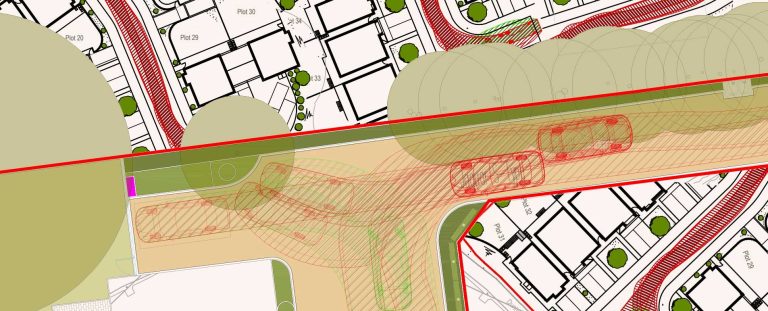
Swept path analysis to confirm that vehicles can safely manoeuvre within the site and access arrangements.
Traffic Impact Analysis
Trip generation, traffic impact and junction capacity modelling to assess the effect of development on the network
How Transport Reports Support Planning Applications
Highway Authorities must be satisfied that a development will not create unsafe access arrangements, unacceptable congestion or parking problems. A good transport report addresses those concerns. I explain how the site will function, demonstrate that impacts are limited and show that the proposal complies with national and local policy. Where issues exist, I can often resolve them through proportionate mitigation, layout adjustments or technical justification.
For more challenging sites, the reports explain your design rationale and build a clear case for why the development is acceptable. I regularly respond to Highway Authority comments and negotiate technical matters during the planning process. I interpret guidance, understand real-world driver behaviour and present evidence clearly and defensibly. By structuring the information correctly and focusing on what the authority actually needs to make a decision, the report reduces risk to the application and improves the likelihood of a positive outcome.
Robust Evidence
Present structured evidence that demonstrates how a development will function in transport and highway terms.
Policy Compliance
Show that proposals align with national and local transport policy, supporting planning acceptance and decision making.
Issue Resolution
Address highways concerns through mitigation, design adjustments and technical justification within the report.
Improved Outcomes
Reduce risk of objection, delay or refusal by providing clear, proportionate and defensible transport evidence.
Related Transport Planning Services

Discuss Your Planning Project
If your application requires highways evidence or has raised concerns with the authority, I can prepare a clear and proportionate transport report to support your proposal and help move things forward.